Home » 2013
Yearly Archives: 2013
In Major Hospital Systems, Is it Truly Patient First?
Many doctors are leaving private practice and becoming employees of giant hospital systems. This is not because they want to but because of financial hardship – the cost of private practice is rising while payments and revenue are shrinking. According to the New York Times in 2002 70% of medical practices were physician owned and this dropped to below 50% in 2008.
I know a surgeon employed by a hospital on the East Coast. He finds that working for “the man” is not all that rewarding. He likes the certainty of income, avoiding the issues of hiring/firing and he no longer has to worry about billing and collections. This hospital like many around the country has emblazoned everywhere slogans about quality, “patient first”, and excellence. This surgeon feels these are false messages, more a form of advertising or proclamations.
The reality is that the hospital wants increasing efficiency and higher patient volumes. Like all his ‘partners’ he has a target he has to meet yearly so that his employer (the hospital) will pay him his full salary. Every time he sees a patient in consultation or operates, he generates a certain number of RVUs (Relative Value Units). A more complex consultation or more difficult operation is rewarded with more RVUs.
In private practice he ran 2-3 clinics a week where he could spend an hour or more with new patients. As an employee he can’t run more one clinic a week, as the department of surgery has a limited budget. It can only hire a small number of nurses and physician assistants all of whom are busy helping the other surgeons. In his one clinic he is given ½ hour for new patients and less time for follow-up visits. The financial targets are increased every year so all the surgeons have to generate ever more RVUs. In order to increase efficiency, my colleague was encouraged to see more patients in his clinic and cut new patient encounters down to 15 minutes. On most clinic days, he has no time for lunch. He was instructed find other ways to generate more RVUs, but his department would not be hiring any more staff to support this goal because of budget constraints. His busy schedule and lack of support also limits his availability to help colleagues when urgent consults arise.
He wonders if the same ‘higher-ups’ and administrators exhorting him to do more, could do their job with similar limitations in their support staff.
These factors are eroding his satisfaction at work and leading him to ponder leaving or retirement. When he told his supervisor, he was informed there would be no changes, the work volume and lack of support would persist and he like other doctors who have already left, could be replaced.
That is not the best method to make employees feel valued. The doctors and staff feel little respect from the ‘system’.
This constant push for more production really flies in the face of the proclamations posted everywhere about “patient first” and quality. There is a pathologic obsession with RVU production. Perhaps a move to a Value Based RVU system may help http://www.nejm.org/doi/full/10.1056/NEJMp1310583.
My overall sense is that those considering moving from private practice to becoming a hospital employee should carefully investigate the philosophy of the organization first.
Healthcare – The Moral Duty to Buy Health Insurance
Click on this link to read it – Moral Duty to Buy Health Insurance

This article in JAMA was pointed out to me by my son. Tina was his fellow classmate in the Yale Philosophy Phd program. I understand this article caused a stir among celebrities.
Overcoming fragmentation in health care (Mayo Clinic CEO John Noseworthy)
Overcoming fragmentation in health care (Mayo Clinic CEO John Noseworthy
Mayo’s CEO talks about our fragmented health care system where quality of care is variable, which cannot sustain high spending on the Harvard Business Review.
By not engaging in Social Media, your company’s digital footprint will shrink
Having just returned from Mayo where I could freely drink from the Social Media waters, it seems a letdown to return to my hospital where access to Facebook, Twitter, Pinterest, Slideshare etc is blocked. Even email updates about our internal private Yammer network are filtered out by their spam filter.
At the recent Mayo Social Media Residency I shared my views with representatives from Lehigh Valley, City of Hope, American Acedemy of Orthopedic Surgeons, Baylor University, The Doctors Company, Sutter Health, the list goes on and on. They were amused about my system’s inability to embrace Social Media.
While the meeting was underway, we were broadcasting live Tweets, Blogs, and posting videos to social media sites. That is not possible where I work.
This is not likely to change soon.
At the Residency we were shown a video of a speech by Mayo’s CEO Dr. John Noseworthy who in 2009 exhorted the clinic to accelerate effective application of social media throughout Mayo Clinic. A year later the Mayo Clinic Center for Social Media was launched. The rest is history for all to see on the Internet, unless you are at my hospital (I attempted to look at the Slideshare Mayo Social Media history but my access was blocked).
My health system can and should do this. The change will have to bubble up from us minions at the bottom driven by progressive loss of our digital footprint to other more progressive health centers.
If we wait for the change to come from above, I fear I will then be closer to reaching Medicare eligibility.
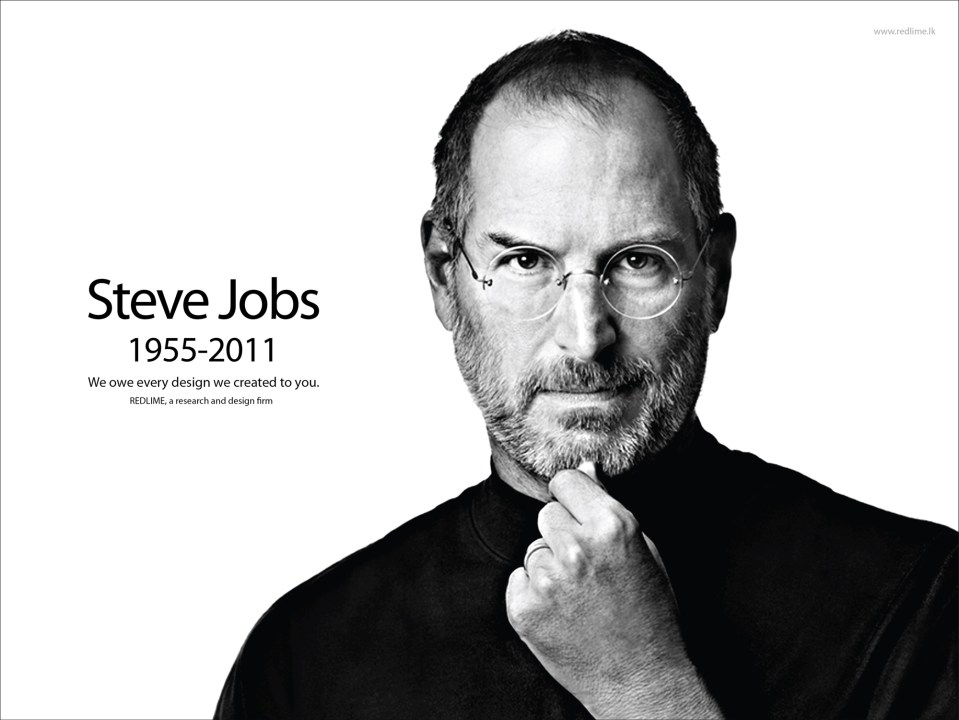 Because of Steve Jobs everyone can be a publisher. When he unveiled the iPhone on Jan 9, 2007 he put the ability to ‘publish’ within the reach of all. We no longer have to sit at a computer, printing press, TV or radio station, use a tape recorder, a still or video camera. We carry all the means of broadcast in our pocket, we can do it on run. No one can shut us down. As Marshall McLuhan said, “the medium is the message.” Now the message is the message.
The Road Ahead
I learned a lot at Mayo this week and quickly applied it. I want to share this knowledge with my colleagues but the story would really play more like this:
One day I left my village and travelled to the city. I read many wonderful books and I came back to my village and told the villagers about these books. However they could not see what I learned nor could I show them because books are banned in my village.
I felt like a delegate from North Korea who came to the Mayo Clinic to learn about Social Media. Upon my return home, I was not able to show my country folk the value of Facebook, Twitter, Pinterest since my country does not allow access to these sites.
This is the problem I face at my hospital. I want to demonstrate to my colleagues the wonderful things that social media can do for their practice and for medicine and for their patients. The problem is the access to all social media on the Internet at my hospital is blocked. The only way to show them the benefits of social media is by taking them off campus.
Even more laughable is that all emails from my friends at the Mayo Clinic Center for Social Media are filtered out by my hospital system spam filters. So much for a two way conversation.
I want to start somewhere, for me it’s the bottom rung. I see a long climb ahead. I am a neophyte in these arenas but I have started my on my own. My employer will not support me and I suspect, some will try to stop me. They cannot stop me from expressing my views. I am not going to make defamatory comments. I do not plan to disclose any medical, personal, or confidential information. I will follow the ethical guidelines for Social Media use as outlined by the Mayo Clinic. Mayo Clinic Social Media Guidelines
Let light shine out of darkness as it says in the Bible 2 Corinthians 4:6
My Health System Among the Most Wired?
In July 2013 I saw the headline: My system was named among the national Most Wired providers. Really? What I really like is irony and I can’t keep quiet about something this ironic.
When you turn on your wireless device at my Medical Center you will see an invitation to “like” it on Facebook. Click on it and you find access is blocked. Try going to your Facebook page, you can’t. Try to Tweet about this Most Wired facility, you can’t.
I have asked why. Answers range from security to patient privacy.
Leadership told me that Most Wired refers internal processes, their medical record and communications. So semantics aside, internally we are well connected. But greater acclaim will come if this medical system starts to connect externally to the rest of the digital world.
Internally, communication amongst ourselves is impeded. I joined Yammer which is a private social network. Only employees of my hospital can see its private Yammer network. In this ‘Most Wired’ hospital all emails from my colleagues about Yammer are filtered out by its spam blocker. The reasons given resolve around security.
At Mayo access to all these Social Media venues are not blocked. Is the largest integrated health system in the world less concerned about security than my system. The reality is that my system shows its weakness in this matter.
Am I trying to stir the pot? You bet I am. I want to engage my own system, in a discussion about the importance of Social Media and Health Care. I am tired of hearing No. Let’s talk instead or as they say in Social Media, let’s engage. It isn’t just Social Media, it is Social Engagement or Exchange.
My hospital needs to be ‘wired’ to the digital community to truly deserve the Most Wired award.
Mayo Clinic Social Media Residency October 21, 2013

Mayo Clinic Social Media Residency in session.
I’ve talked to many of the attendees who not surprisingly have heard about Geisinger health system. They have heard of Obama’s pronouncement that it is one of the model health systems in United States. They have seen the June 2012 TIME Magazine cover which features our health system prominently.
Yet Geisinger has a tiny digital footprint with a negligible social media presence. Ironically if a similar social media residency were held on our Geisinger campus, real-time blogs and tweets would be blocked on its wireless system.
Nothing stops me from blogging or tweeting about this wonderful event. I will continue to do so until the barriers to social media are taken down on the Geisinger facilities.
Mayo Social Media Residency Rochester, MN October 21, 2013

Here is the group enjoying learning about social media, despite the bitter cold.
Geisinger Heath and Social Media
In early October 2013 the Geisinger Health system held a special one-day conference on social media. I was unable to attend since I was at the annual American College of Surgeons meeting in Washington DC.
I would hope that from such a meeting Geisinger would come out of the dark ages and start to allow its employees and others to access social media while they are on their facilities.
Since the meeting nothing has changed. Though wireless access now no longer requires a password when you get a message to ‘like’ Geisinger on Facebook while on it’s wireless system you find yourself instantly blocked.
Similarly, access to Twitter, Pinterest or any of the other important social media sites continue to be blocked. Any inquiry about the reasons are met with the answer that Geisinger is very concerned about patient privacy. Why can large systems like the Mayo Clinic successfully engage with social media? Is Mayo any less concerned about patient privacy than Geisinger, I doubt this is true.
Meanwhile patients and their family, doctors, nurses, other healthcare providers are walking around Geisinger most of whom are carrying a mobile computer in the form of a smart phone or tablet. These folks have the ability to photograph or film anything going on in the hospital so if Geisinger is so concerned about privacy why doesn’t it confiscate these devices at the door? Instead of metal detectors, Geisinger could install detectors for smart devices.
I am being facetious. My hope is that with time and I hope this time is soon, that the Geisinger system will allow access to Social Media. It is only through such access that the system can improve its engagement with patients and their families. The benefits are immeasurable.
 Social Media and Surgery